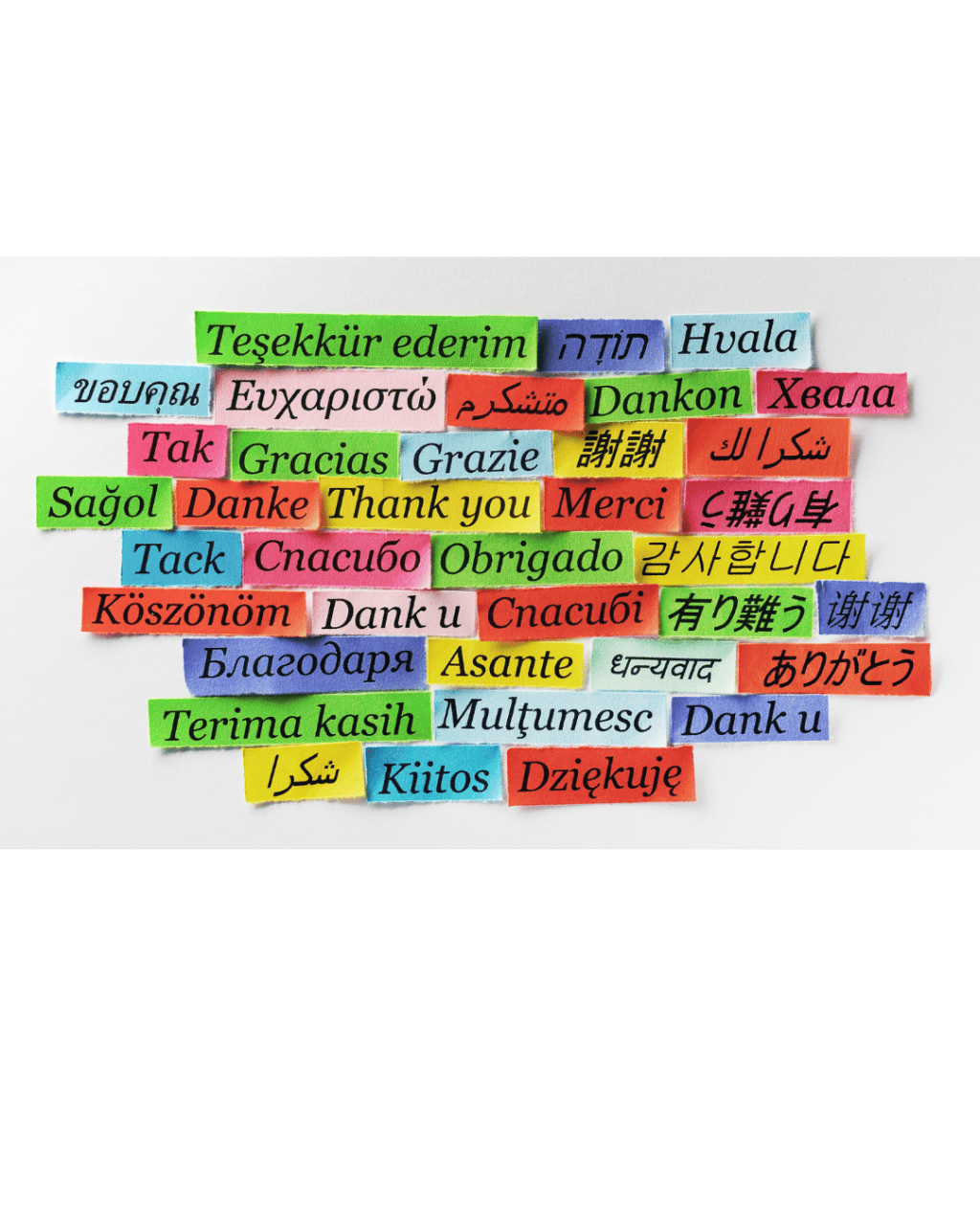

Supporting children’s home languages while they learn Greek at school
In our school community, more and more children grow up with more than one language around them. Greek may be the language of instruction at school, while at home one parent speaks English, French, Hebrew, Italian, Arabic, German, Spanish, or another language. In some families, neither parent speaks Greek; in others, one does.
For many families, this creates a very understandable question:
Should we speak more Greek at home to help our child at school?
In most cases, there is no need to. Continuing to use the language in which each parent can communicate most naturally and fully is usually one of the most valuable things a family can do.
The goal is not for Greek to replace the languages of home. It is for Greek to gradually become another language through which the child can communicate, play, build relationships, and make sense of their world.
Keep the language that belongs to your relationship
Perhaps the most important advice we can give multilingual families is quite simple:
Speak to your child in the language in which you can be most fully yourself.
If you naturally speak French to your child, continue speaking French. If one parent speaks Greek and the other English, there is no need for the English-speaking parent suddenly to switch to Greek simply because school has started.
Because language is much more than vocabulary. It is the way we tell a story or explain something difficult; the words we use to comfort a child; the jokes that make sense only in a particular language; the songs we remember from our own childhood; and the expressions that appear naturally when we are excited, irritated, affectionate, or playful.
When adults begin speaking a language in which they feel less confident, sentences may become shorter, vocabulary simpler, and conversations more functional. Instead of discussing what happened during the day or how somebody felt, communication can gradually become limited to instructions: “Come here.” “Eat your food.” “Put your shoes on.”
But children need much more than instructions. A rich conversation in Spanish is more valuable than a limited one in Greek simply because Greek happens to be the language of school.
Greek does not have to be taught by every adult in the child’s life
This is another concern I often hear from multilingual parents: “But how will my child learn enough Greek?”
For a child attending a Greek-speaking early-years setting every day, Greek is already present for many hours. They hear it during play, meals, and stories; while getting dressed, negotiating with other children, being comforted by a teacher, or preparing to go outside.
Greek does not exist only during a “language lesson.” It is connected to real situations, relationships, and actions. A two-year-old gradually understands familiar (high – frequency) words like : νερό, παπούτσια, έξω, έλα, and πάλι by hearing these words while drinking water, putting on their shoes, going outside, or asking for something to happen again.
The language begins to make sense because the situation makes sense.
What should happen at school?
The responsibility of the school is not simply to expose the child to Greek and wait. Teachers need to make communication accessible even before the child understands much of the language.
Imagine a child who has recently arrived at school and understands very little Greek. A long instruction such as “Βάλε το παγούρι σου στη θέση του, πλύνε τα χέρια σου και μετά έλα να καθίσουμε για φαγητό” may initially mean very little. The teacher can make the same message understandable by moving closer, showing the bottle, pointing and saying, “Το παγούρι εδώ.” Then, while moving towards the sink: “Πάμε να πλύνουμε τα χέρια.”
Gesture, movement, facial expression, objects, and routine all help carry the meaning. Predictable routines are especially valuable: even before children understand all the words, they begin to understand what happens next. As the experience becomes familiar, the language attached to it becomes easier to understand too.
Participation should not wait for Greek fluency
This, for me, is one of the most important principles. A child does not need to speak Greek before they can fully participate in school.
They can build, paint, dance, climb, join a game, help prepare the table, laugh with another child, follow a song through movement, or offer somebody a toy.
Language develops inside these experiences. Two children building with blocks do not necessarily need a common language before they begin playing. Something falls down. They laugh. A teacher nearby says, “Έπεσε!” A little later: “Πάλι;” Then: “Θέλεις κι άλλο;”
The teacher has not interrupted their play to give a Greek lesson. There is no Greek lesson taking place; yet a great deal of Greek is being learned.
We don’t need to turn everyday communication into a test
Sometimes, with the best intentions, adults become very enthusiastic about the child’s progress in Greek. Gradually, conversations begin to sound like this: “Πώς το λέμε αυτό στα ελληνικά;” “Τι χρώμα είναι;” “Πες το στην κυρία στα ελληνικά.”
There is nothing wrong with occasionally asking a question. But not every interaction needs to become an opportunity for children to demonstrate what they know.
Imagine a child points towards the water. One response might be: “Τι θέλεις; Πες νερό.” Another would be: “Θέλεις νερό. Ορίστε.” In the second, the child hears the Greek they need without having to produce it first. We can model language without demanding performance.
And what if the child speaks to us in another language?
They should be allowed to. A child may tell their teacher an entire story in French while the teacher understands almost none of it. That does not make the communication meaningless.
The teacher can listen, notice gestures, follow where the child is pointing, and ask them to show what happened. What matters is the message we give the child. There is a considerable difference between “I don’t understand everything you’re saying, but I want to understand you” and “Speak Greek.”
Multilingual children often use everything available to them. They may begin a sentence in Greek and finish it in English, or know a word in one language but not yet in another. This is not evidence that the child is confused. It is often simply what multilingual communication looks like as their languages develop.
The languages of home should have a place at school too
A Greek-speaking school cannot realistically operate in every language represented in its community. Nor does it need to. But children’s home languages should not become invisible the moment they enter the classroom.
Teachers can learn a few important words. A familiar song can be played, a parent invited to read a story, and books in different languages added to the library. Children’s names should, of course, be pronounced correctly.
For our youngest children, a handful of words can be surprisingly useful. What does the child call their mother? What words do they use for water, sleep, toilet, pain, more, or finished? For an eighteen-month-old, hearing one familiar word at the right moment can matter enormously.
The purpose is not to create a classroom in which everything is translated. It is to communicate something much simpler: “The language of your family is welcome here.”
Some children will speak Greek very quickly. Others will take their time
There is no single timetable. Some children experiment with Greek almost immediately. Others spend a considerable period listening. That can worry adults: “He understands everything, but he doesn’t speak,” or “At home she talks constantly.”
But listening is part of language learning. A child may notice recurring words, understand routines, and build an internal map of the language long before they feel ready to use it.
We also need to be careful about how we describe children’s abilities. A four-year-old who tells complex stories in Italian but currently speaks very little Greek does not have “poor language.” Their Greek is still developing. Those are very different things.
Whenever there are concerns about a child’s language development, we need to consider how they communicate across all the languages they know, rather than judge their overall ability from Greek alone.
For very young children, this is also about emotional security
This becomes particularly important when we are talking about children of 12, 18, or 24 months. A five-year-old may be able to understand: “They speak Greek here. Daddy speaks English.” For a very young child, the experience is different.
Suddenly, many of the words that have always helped them communicate their needs are no longer understood by the adults around them. The words they use for their bottle, their mother, being tired, or wanting more may not work in this new environment.
At that age, language support cannot be separated from emotional security. A calm adult, predictable routines, gestures, physical proximity, a few familiar words, and time are not secondary to the “real” language learning. They are part of how the child begins to understand and trust the new language too.
Perhaps we are asking the wrong question
Parents sometimes ask: “What can we do at home to help our child learn Greek faster?” Perhaps the more useful question is: “How can we help our child grow confidently in both the language of home and the language of school?”
The answer may require families to do less, not more. There is no need to turn the home into another classroom, test Greek vocabulary at dinner, or abandon the language through which a parent has always communicated with their child.
At home, continue talking, reading, explaining, telling stories, singing, making jokes, and working through disagreements. Talk about today and what might happen tomorrow. Do all of that in the language that allows your relationship with your child to remain as rich as possible.
And allow school to do its part. Because the best outcome is not a child who has exchanged one language for another. It is a child who can move between the languages of home and school without feeling that one has had to disappear for the other to grow.
Their world has become larger because another language has been added to it.
Selected resources
• NAEYC – Recommendations for Early Childhood Educators
• NAEYC – To Speak or Not to Speak My Language: Supporting Families’ Home Language Practices
• American Academy of Pediatrics – Young Children Learning Multiple Languages: Parent FAQs • Raising Children Network – Raising Multilingual and Bilingual Children: Tips

